20/7/19
34.1 nm
After deciding to turn back, we had to negotiate the infamous lock at Azul again. Petra had found out that you could book a place in the lock online, so with a beer, an hour was spent trying to work out how this was done on the French only website.
Luckily this time because the road bridge has to be open for the boats to enter the lock, there was no shuffling and it all went well. Out in the open sea with the low winds coming from the direction we wanted to go, and not a great distance to get to Le Trinity sur mer, we all tacked away to our hearts content having fun but not really getting anywhere. At 1515 hrs the wind finally died so engines on.
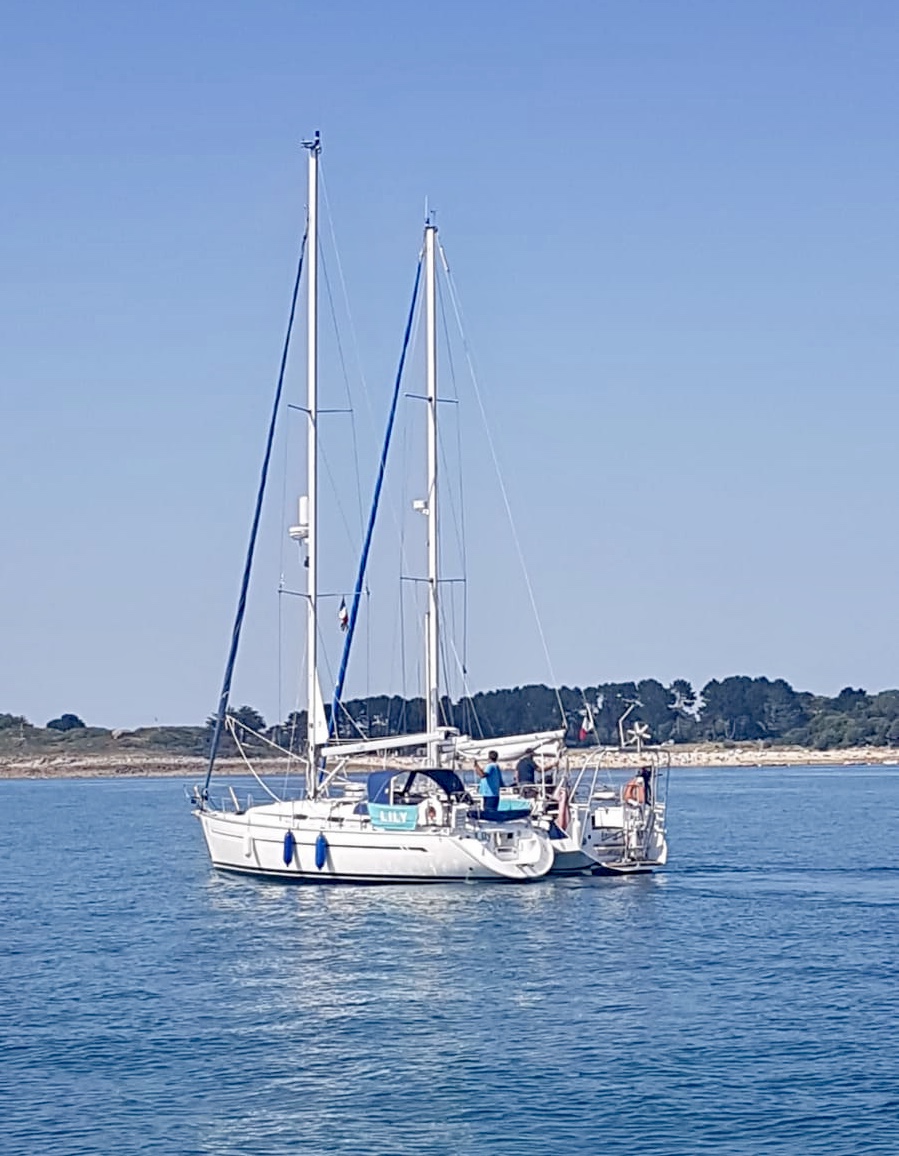
About 2 miles out from the marina, Lily was hailed by a French boat with engine failure. So to help out and not knowing if there was a strong tide in the river, we decided to tow them side by side. When we arrived at the marina a rib took over the towing duties. Later that evening a dinghy pulled up next to Lily with a bottle of wine and some biscuits.
Expecting Le Trinity to be another very large marina overloaded with boats, we were pleasantly surprised, with it’s cafes and restaurants overlooking the boats and river, the fish halles next to the pontoons, a supermarket and market, it was a very useful place to re-stock.
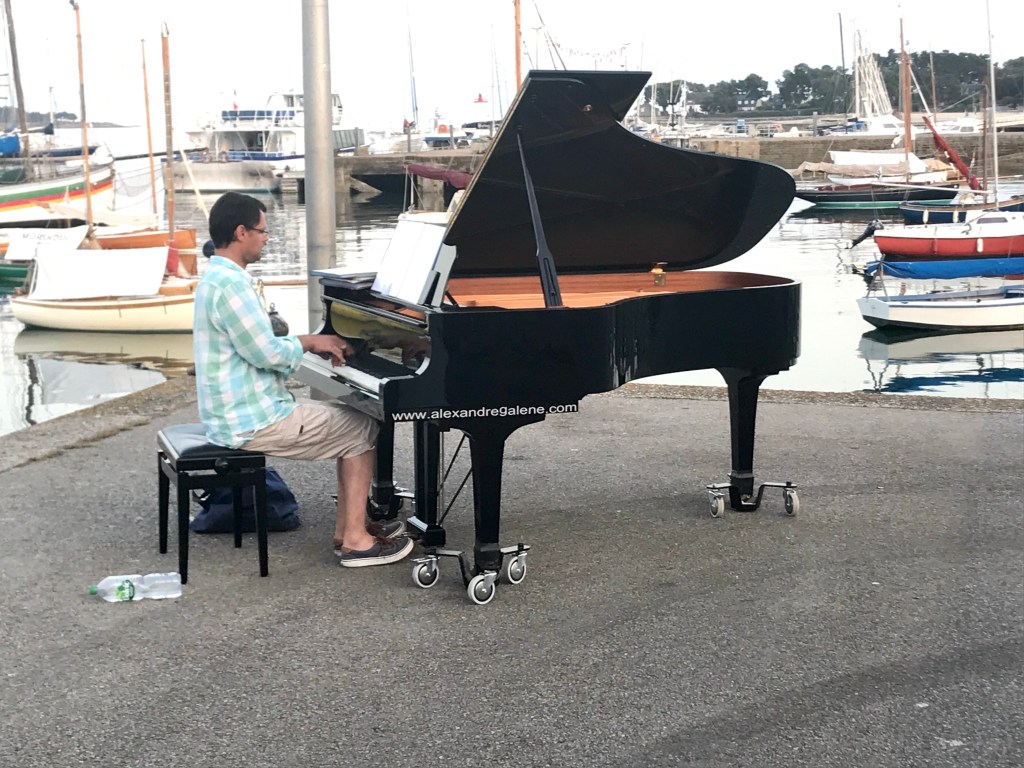
There was even music on the quayside, and we were in a in a great place to visit Carnac, as Suzanne explains next.
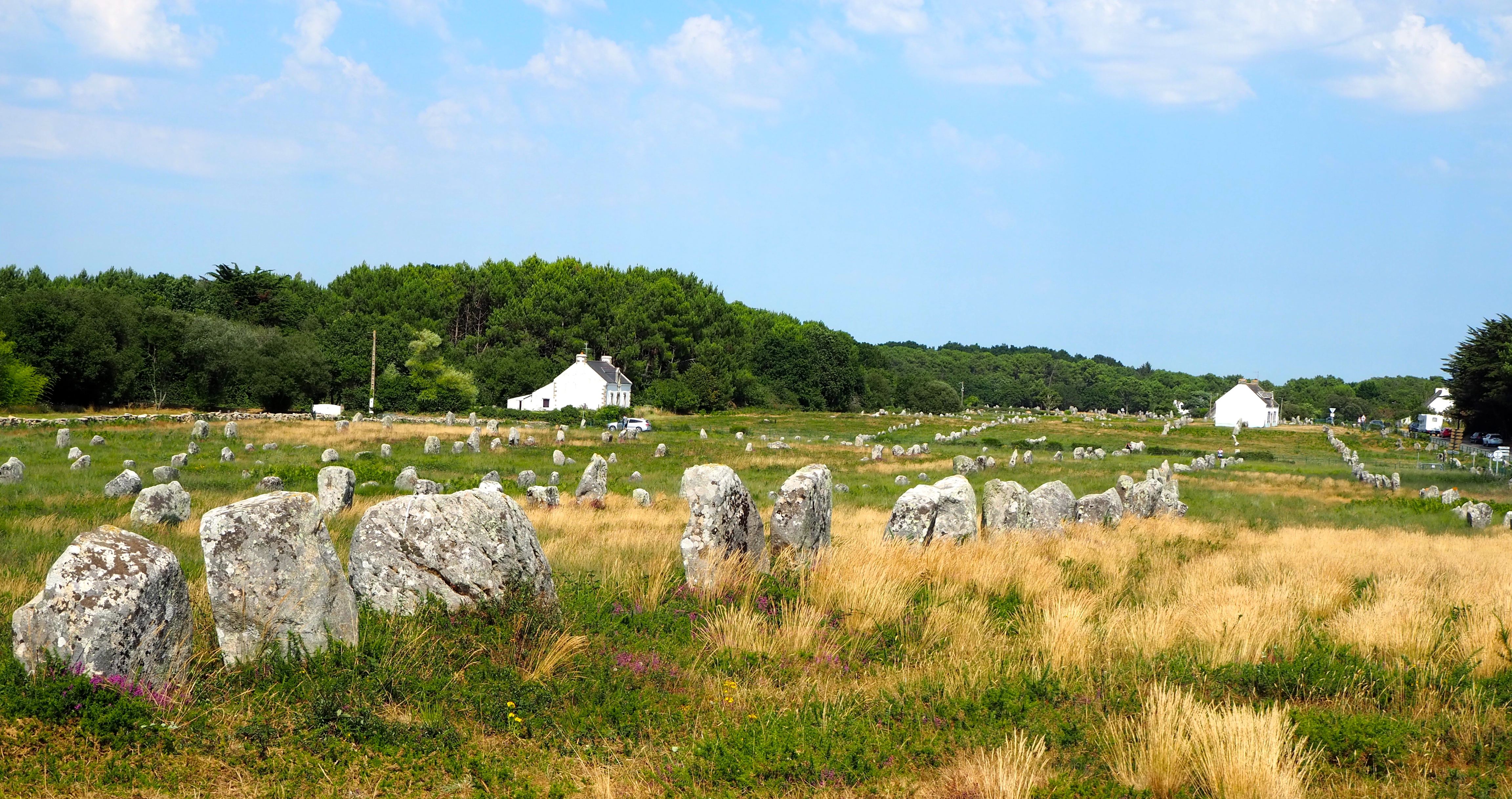
Carnac
The Carnac stones are megalithic monuments located next to the Gulf of Morbihan in the Carnac, Brittany district.
Martin and I have wanted to visit these monuments for several years and now we finally had our chance. Trinity–sur-mer being the closest marina to Carnac, we hired bicycles from the port office and set off in the afternoon for the 45 minute uphill cycle to the site. The thought of ‘downhill all the way back’ made it easier!
Dating from around 4,000 BC there are more than 3000 aligned megaliths making Carnac the largest concentration of prehistoric hand-hewn rocks in the world. Unlike Stonehenge in England where some of the stones were transported a great distance from south Wales – the Carnac stones were all cut from the local granite on site.
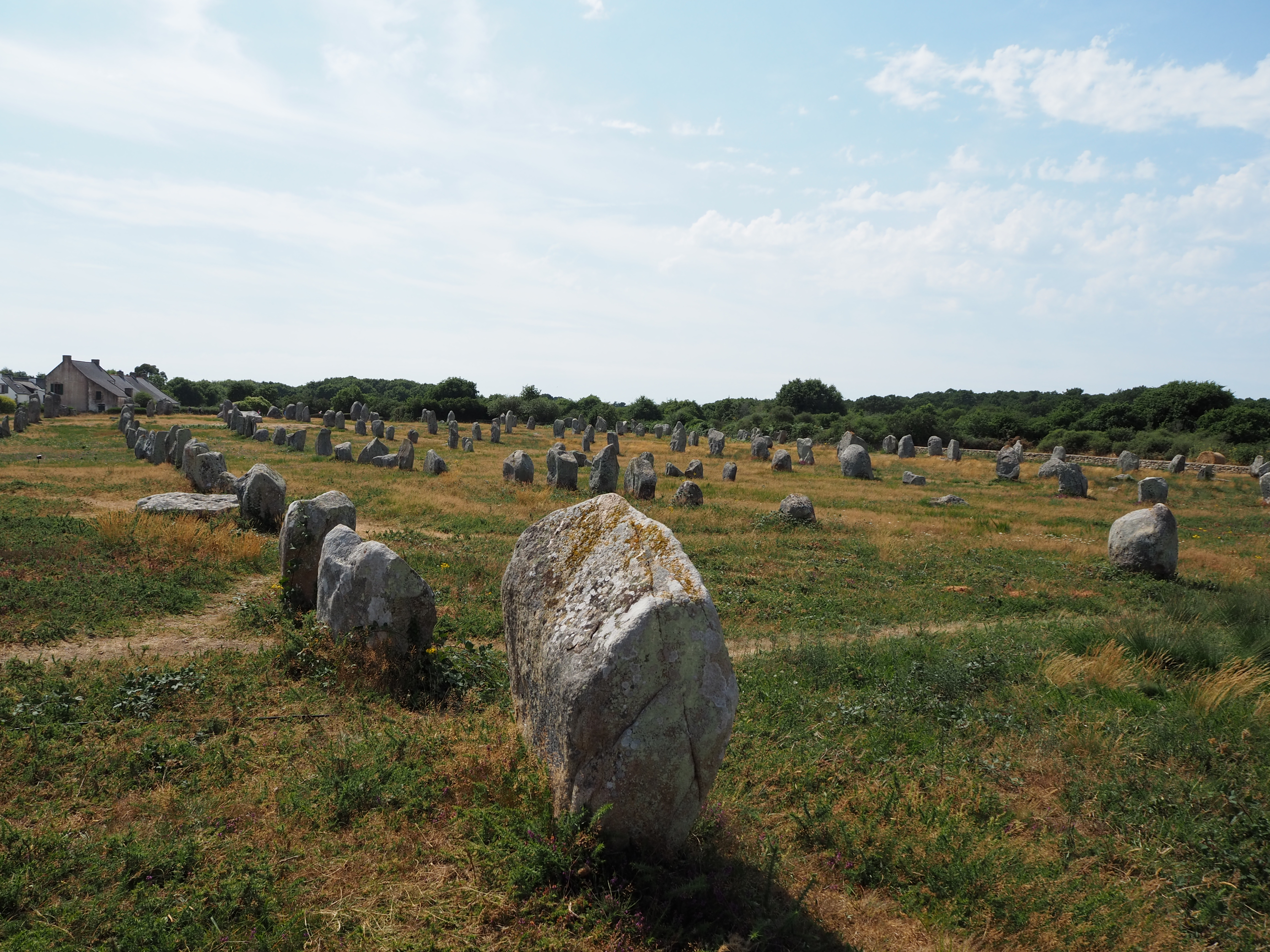
If you have read my previous entry about Crouesty and Petit Mont, you will remember my explanation that standing stones are called Menhirs and stones resting on one another are called dolmens. The majority of the stones at Carnac are Menhirs.
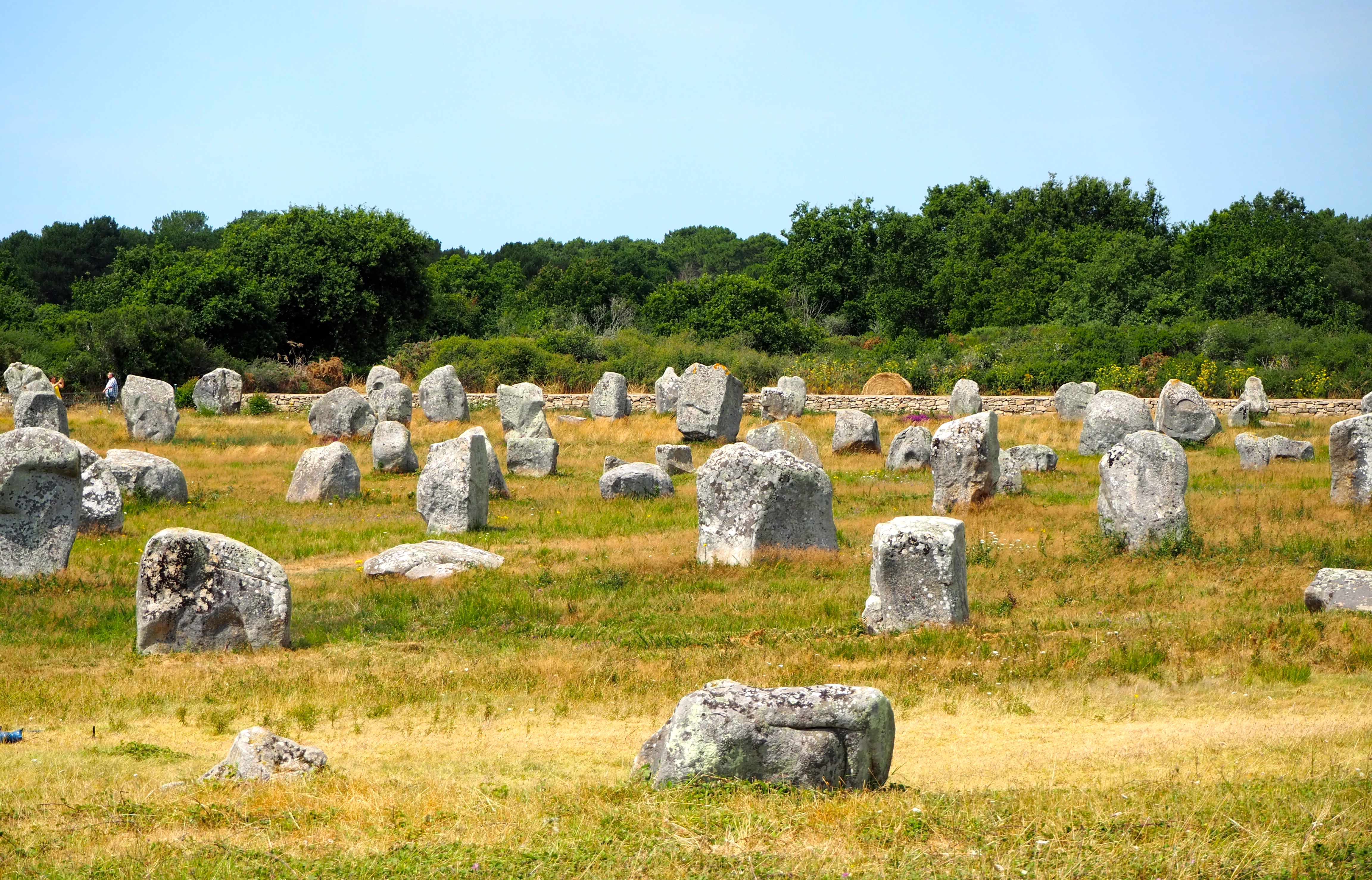
There are three major groups of stones Menac, Kermario and Kerlescan -which may have once formed a single group, but many have been removed over the centuries by locals for building materials for their farms and other projects. We were told that the lighthouse on the nearby island of Belle Isle is made from the Menhirs from Carnac!
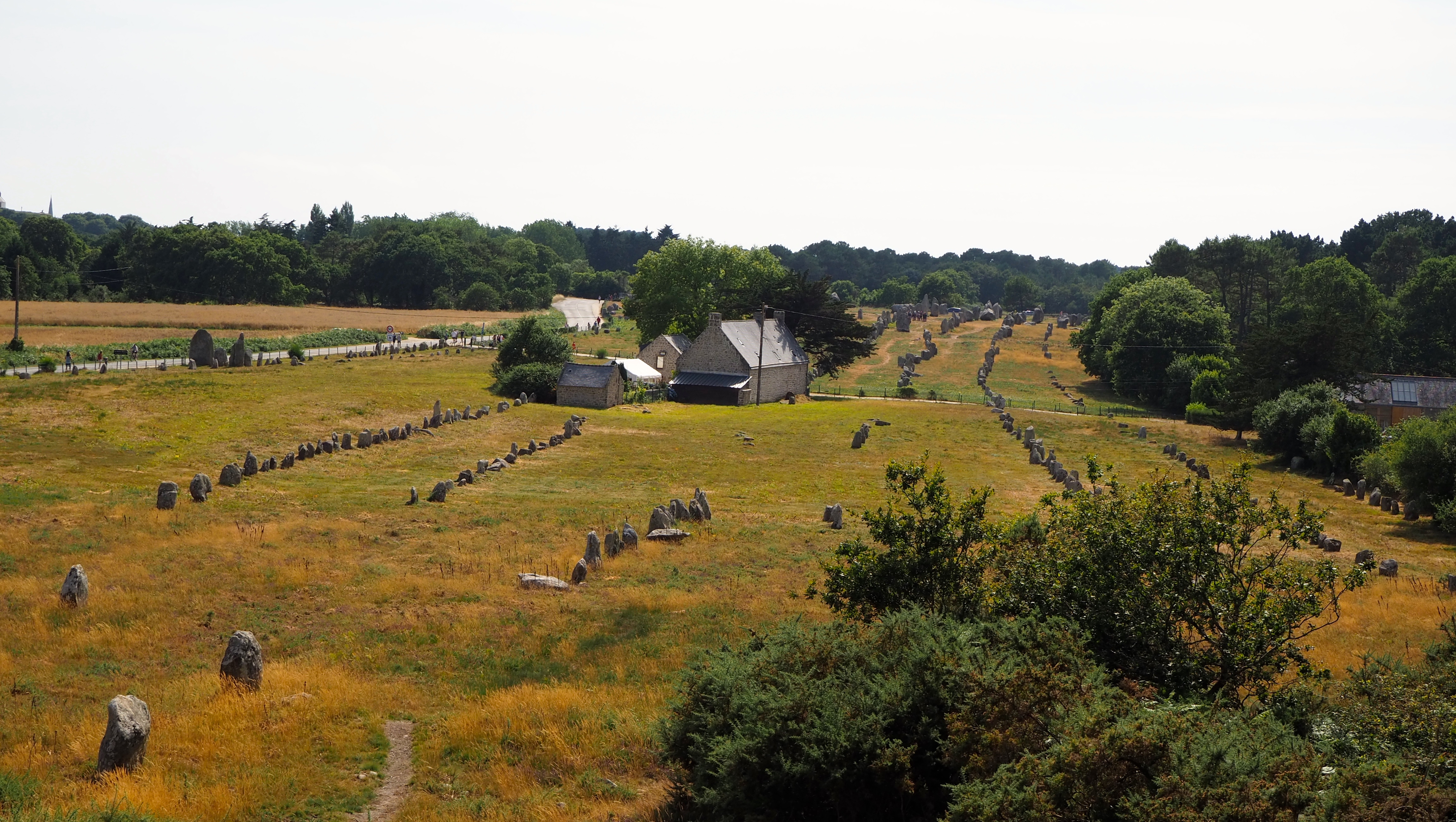
The stones are arranged in 12 converging rows and stretch for roughly 4 km through the Brittany landscape. The height of the stones varies along the row. At the western end of the rows they are tall up to 4m high. They then gradually reduce in height to around 0.6m towards the middle of the rows and then get taller again at the eastern end. This also corresponds with the hills and dips in the landscape – taller stones on the high ground. The main group stretches for more than a kilometre with the remains of a stone circle at either end.
Although it is not known why the stones were erected it is thought that they had cultural or religious significance. Many theories have been put forward over the years – but none have been proven.
Naturally lots of myths have perpetuated over the years – one such being that on All Saints Eve the stones sprout feet and run down to the sea to bathe!
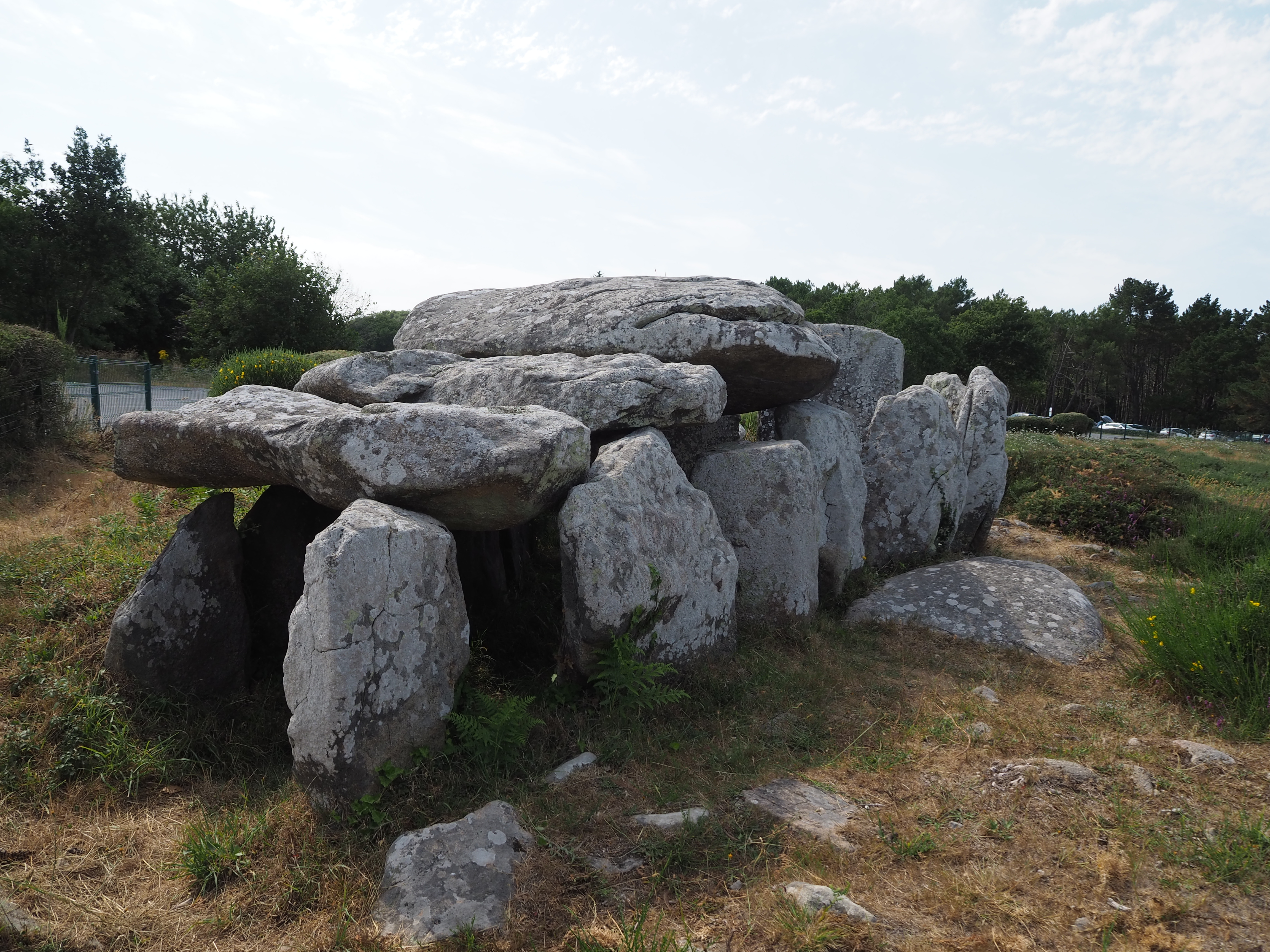
Anyway, we duly signed up for the only English guided tour of the day, which fortunately for us was later that afternoon and came back a lot wiser than we had been before our visit.
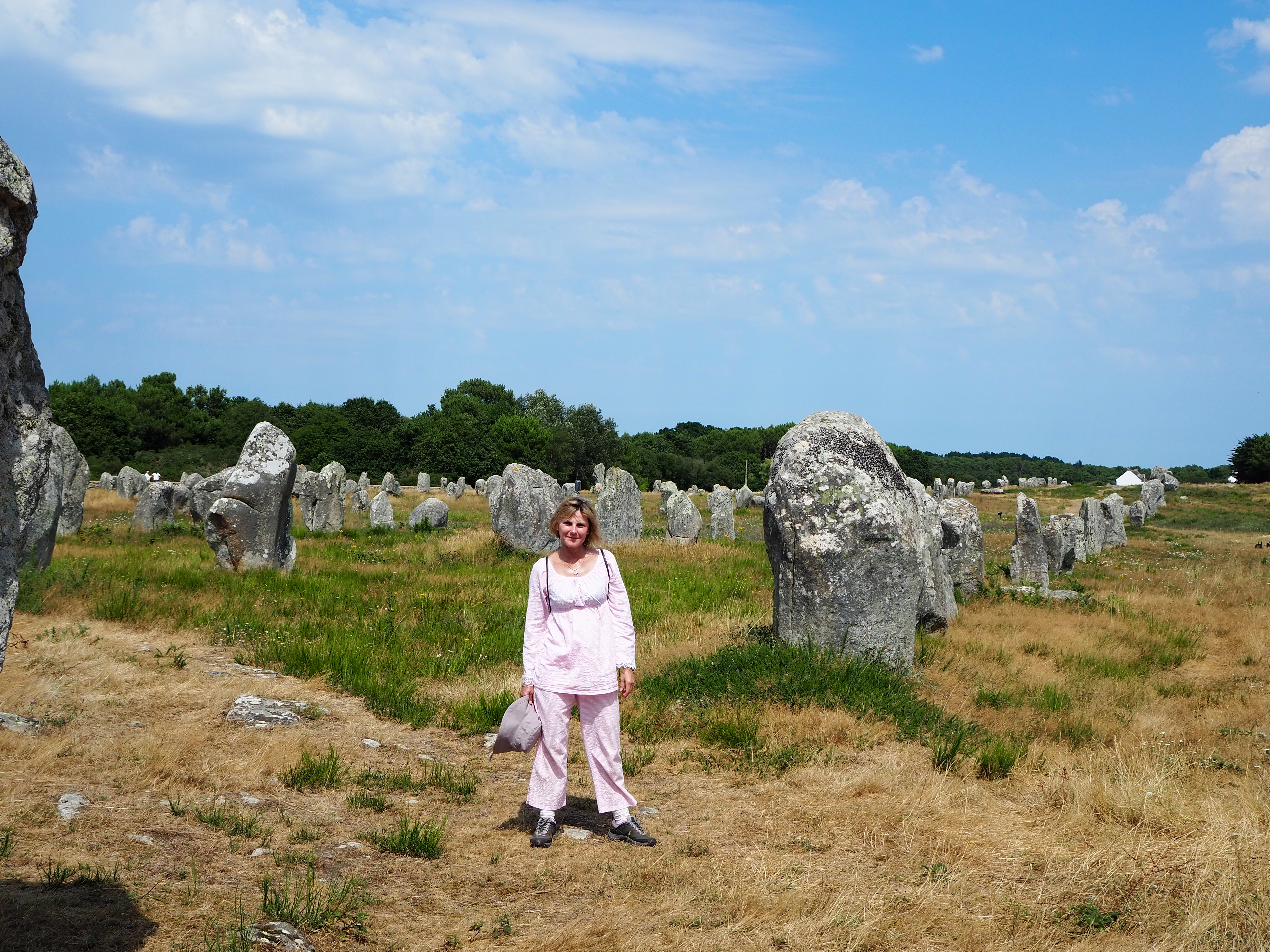
Sadly we did not have time to visit the museum and visitor centre properly. If this sort of thing interests you, an afternoon is not enough…
French Cuisine – The Vegetarian issue
Chas
This may surprise some of you who are kind enough to follow these random jottings, but the French do eat vegetables, ( and so do I from time to time ).
Vegetables in France are mostly of high quality and actually taste of something. Most are grown in soil, not water, and salad veg in particular are much more flavoursome than at home.
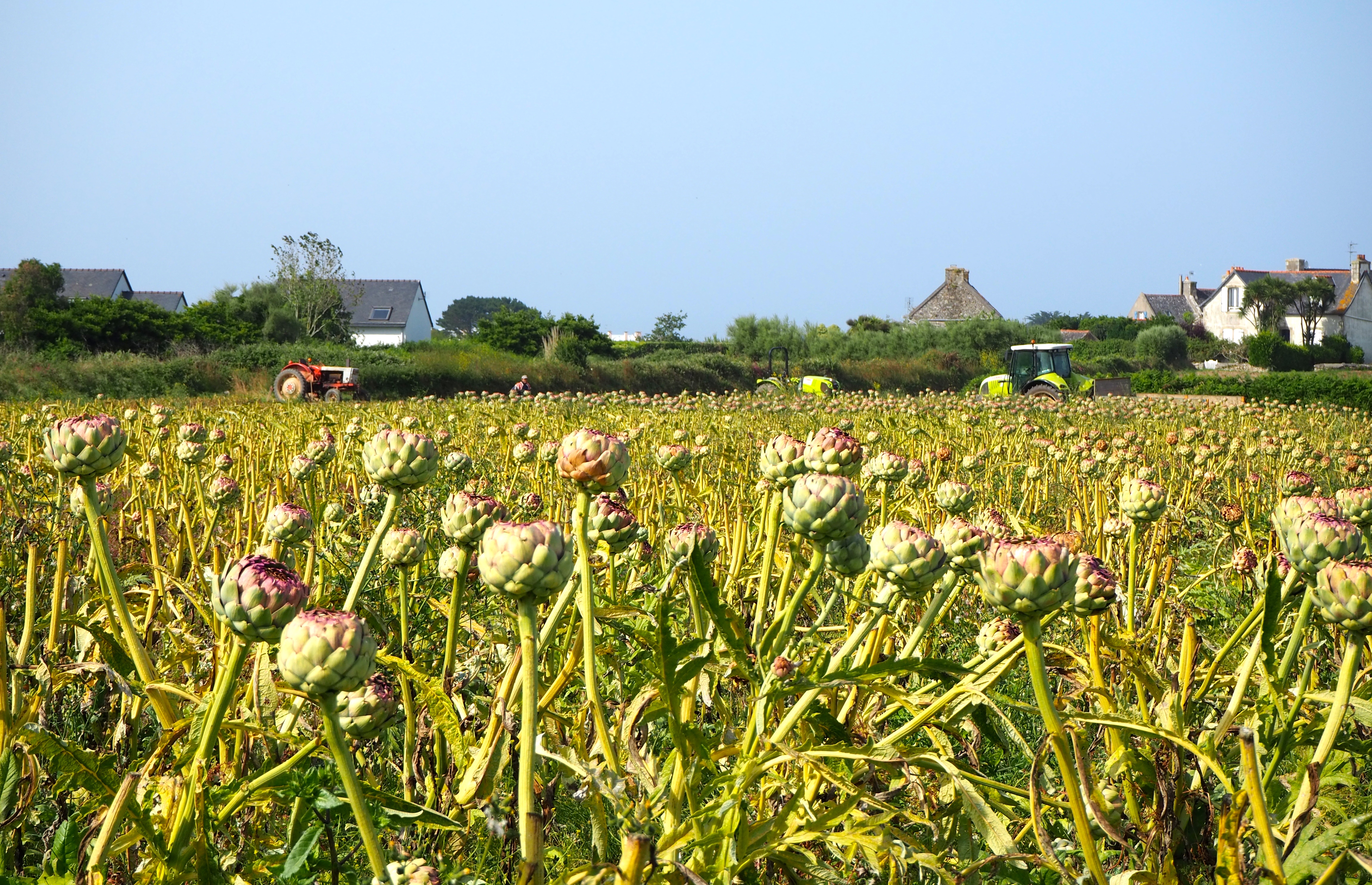
In Brittany, they are especially proud of their globe artichokes, which grow there in great abundance.
A globe artichoke is basically a thistle bud on steroids, harvested and eaten before it bursts into flower. A large globe artichoke looks as if it would feed 3 -4 easily, but unfortunately, more than half of it is inedible fibrous material, so you really need a whole one per person.
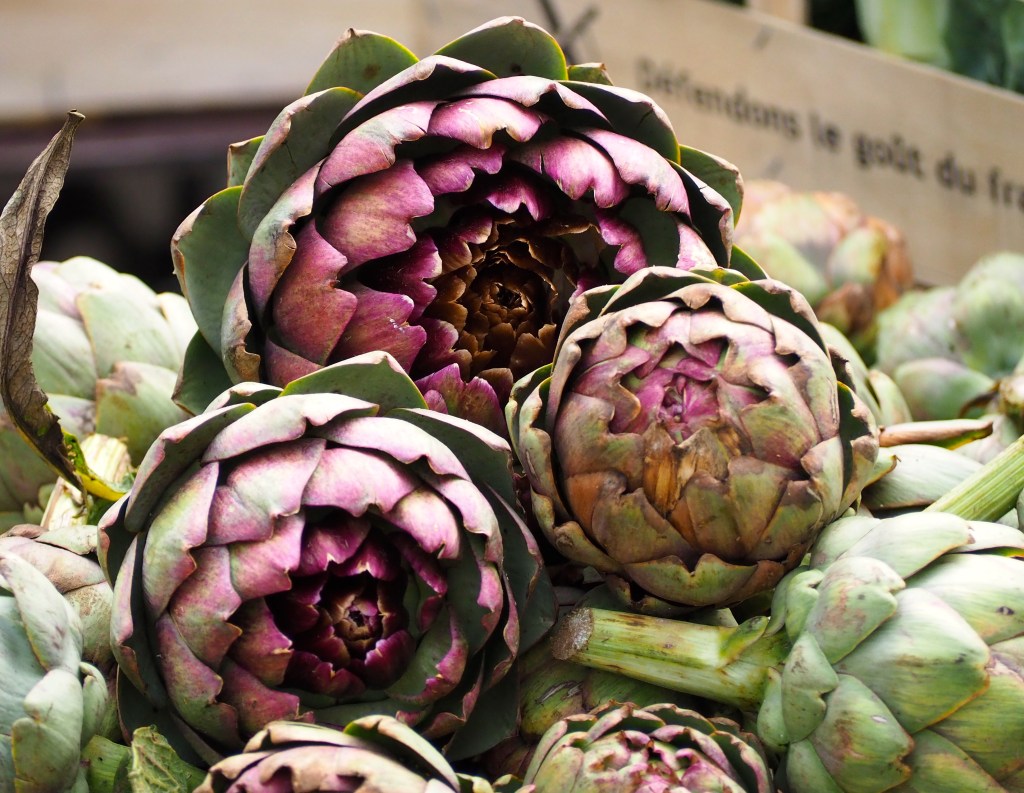
The best bit is the base or heart, on top of which sits the fibrous choke, which must be discarded. This is surrounded by rings of green or purple leaves, most of which have an edible fleshy base.
The simplest way to cook and prepare them is to cut off the stalk, and top inch or so of leaves ( which are mostly fibrous ).
Place in a pot of rapidly boiling water and simmer for 30 -40 minutes, depending on size. The artichoke is cooked when the lower leaf can be pulled out easily.
Allow to cool,then separate the top leaves to expose the fibrous choke. Spare this out with a teaspoon to reveal the fleshy heart below ( this is a bit fiddly and messy, but it gets easier with practice).
Make a dressing of your choice. I like to sweat some chopped shallots and garlic in olive oil, with same bacon lardons, then add lemon juice, Dijon mustard and parsley. Spoon some of the dressing into the centre,and serve, with extra dressing on the side. You then simply pull off the outer leaves, and suck off the fleshy bit until you reach the heart, which can then be enjoyed – a real vegetarian treat ( apart from the bacon, but what the hell….)
An alternative is to remove the fibrous bits before cooling, This is easier with the smaller ones, where the outer leaves and top are cut away, the remainder cut in half, and the choke scared out. You have to be brutal here, or you end up eating something like a door mat. The prepared small artichokes can then be cooked with olive oil and chopped tomatoes for about 15 minutes, and enjoyed hot or cold.
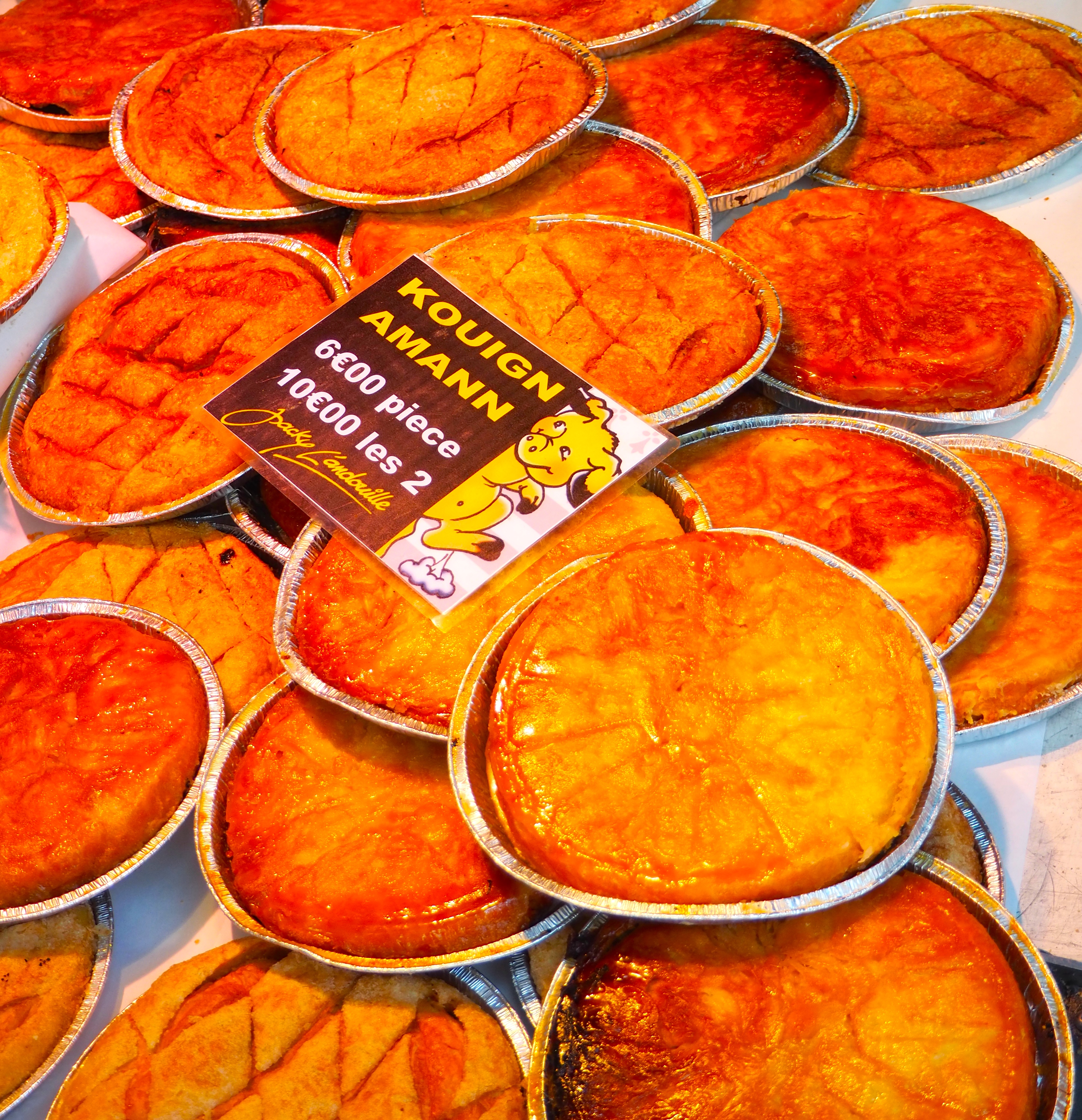
In case this all sounds a bit too “healthy”, fear not. You could finish with another triumph of Breton cuisine, the Kouign Amann. This is a glorious combination of flaky pastry, butter ( LOTS of butter) and sugar, baked to caramelised perfection, and served warm. Any good Breton boulangerie will sell you one…..
26/7/19
log defective about 35 nm ( I later found a couple of little shrimps in it !)
Escapade decided to leave early for the journey to Port Louis, Lily followed at 1100hrs, with the wind from the west it was a good sail to the passage de la Teignnouse, where we had to sail around some cardinals to then come back up the other side of Quiberon, here the sea state had picked up and with app wind at about 18kts we all had a brisk sail close hauled to the Citadel at Port Louis.

 Cruising to Brittany